Key Takeaways
- A child’s first eye exam should happen between 6 and 9 months of age.
- One exam is recommended between ages 2 and 5, then annually during the school years.
- Some signs a child needs an exam sooner include squinting, frequent headaches, or holding books very close to their face.
- Children with a family history of eye conditions or those already wearing glasses may need more frequent visits.
You might assume your child would tell you if something looked blurry or off with their vision. But many kids don’t know what clear vision should look like. They’ve never had anything to compare it to. That’s why at Waterloo Vision Care Clinic, we want parents to know the recommended eye exam schedule for children and understand the signs that they might be struggling to see.
A child’s first eye exam should happen between 6 and 9 months of age, with at least one more between 2 and 5, and then annually during the school-aged years. These visits do more than check if your child needs glasses. They give your eye doctor the chance to catch developing issues before they quietly affect your child’s daily life. From tracking early milestones to monitoring how vision holds up in the classroom, children’s eye exams are one of the most useful tools you have as a parent.
An Overview of the Recommended Timeline
A first eye exam is usually recommended between 6 and 9 months and helps check that the eyes are developing properly. Then, at least 1 exam between ages 2 and 5 sets a clear baseline before your child enters school. From age 6 until they’re done with school in their late teens, yearly exams keep things on track as your child grows.
Why Regular Eye Exams Matter for Kids
The Connection Between Vision and Learning
Think about how much of a school day depends on seeing clearly. From reading a whiteboard across the classroom to following along in a textbook and working on a screen, most of what kids absorb in the classroom comes through their eyes. When their vision isn’t clear, learning can be much harder, and even feel frustrating.
A child struggling in school isn’t always a focus or motivation problem. Sometimes it’s a vision problem in disguise. Regular eye exams play a real role in addressing learning difficulties tied to vision, and catching those issues early can change the entire school experience for your child.
Conditions Caught Early Are Easier to Manage
Lazy eye (amblyopia) and crossed eyes (strabismus) are 2 conditions that may respond better to care when they’re identified early. The longer they go unnoticed, the harder it can be to manage them. A child may not always squint, complain, or notice anything unusual, because they think everyone sees the world the way they do.
That’s what makes regular eye exams so important.
Signs Your Child May Need an Eye Exam Sooner
Yearly exams are the standard, but some signs suggest your child could benefit from a visit before their next scheduled appointment. Keep an eye out for:
- Squinting, rubbing their eyes, or covering 1 eye to see better
- Holding books or screens very close to their face
- Frequent headaches or complaints that things look blurry
These signs don’t always point to a serious issue, but they’re worth getting checked. An exam can give you a clear picture of what’s going on.
If screen time is part of the picture, it’s also worth learning more about digital eye strain in kids and how it can show up differently than a standard vision problem.
Who Needs More Frequent Eye Exams
Family History and Health Conditions
If eye conditions run in your family, your child may be at a higher risk of developing them too. Conditions like amblyopia or strabismus can have a genetic link. Certain health conditions, including diabetes, can also affect how the eyes develop and function over time. Eye doctors in Kitchener-Waterloo can help you figure out the right exam schedule based on your child’s specific history.
Kids Already Wearing Glasses or Contacts
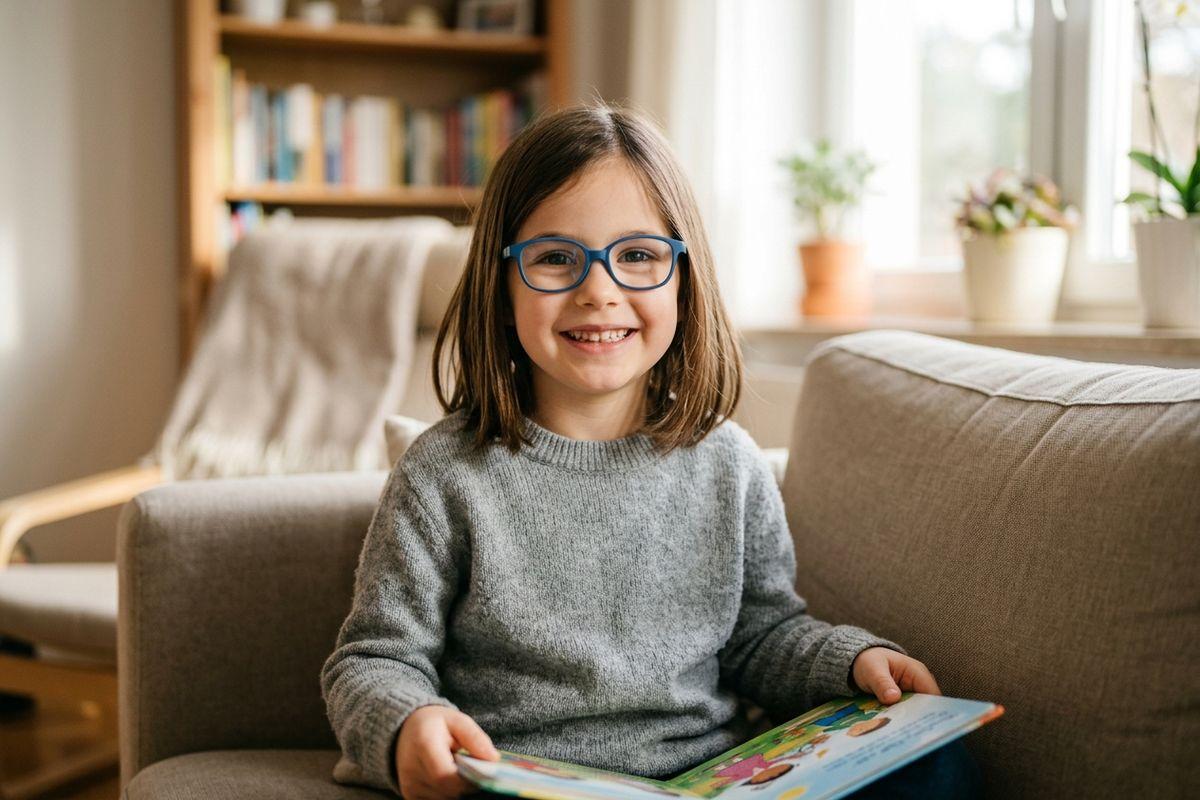
Children’s eyes change quickly. A prescription that fit well 6 months ago might not be the right fit anymore. For kids already wearing glasses or contact lenses, more frequent check-ins help keep their prescription accurate as their eyes grow, as wearing an outdated prescription can cause the same kind of strain as not wearing one at all.
If myopia (nearsightedness) is part of the conversation, our team can also walk you through myopia control options designed specifically for growing eyes.
What to Expect at a Child’s Eye Exam in Kitchener-Waterloo
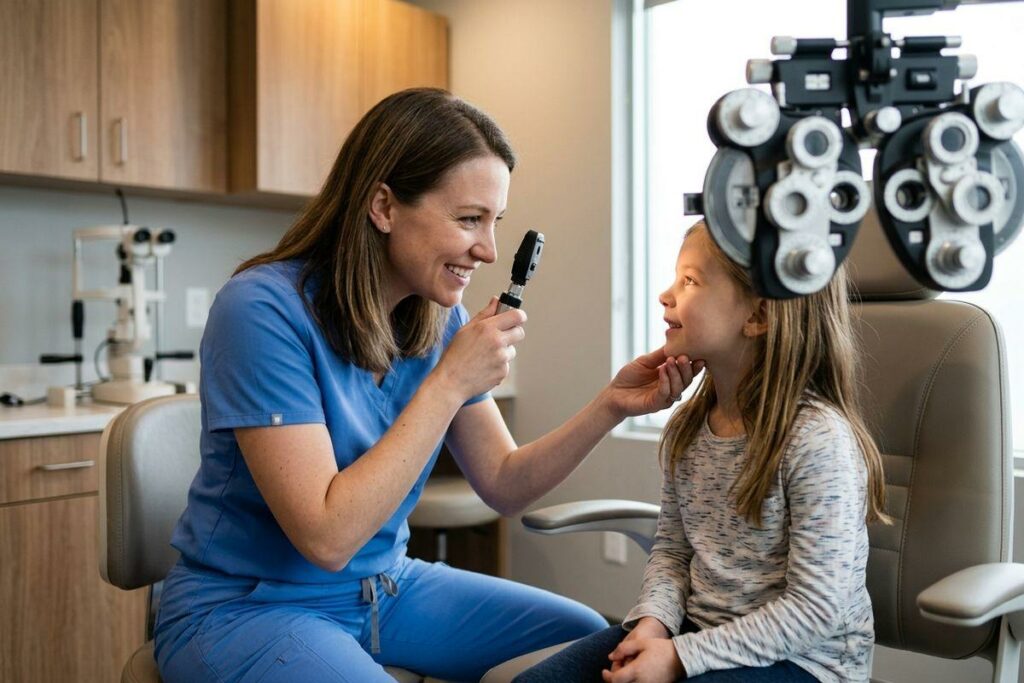
A child’s eye exam covers more than just reading letters off a chart. Your eye doctor can check vision clarity, eye alignment, and overall eye health. The exam is shaped around your child’s age and history, so a visit for a toddler looks very different from one for a teenager.
Waterloo Vision Care Clinic uses diagnostic technology that helps our team get a detailed look at your child’s eye health, even if your child isn’t sure how to describe what they’re seeing. We strive to make sure every visit with us is comfortable for everyone in your family.
Schedule Your Family’s Eye Exam
If it’s time for your child’s next eye exam, or if you’re not sure when their last one was, reaching out to the team at Waterloo Vision Care Clinic is a good place to start. A quick visit today can make a real difference in how your child sees their world tomorrow. Book your visit now.