
Key Takeaways
- Lash extensions and false lashes come in different forms, each with different adhesives and wear times.
- Adhesive ingredients, bacteria buildup, and lash weight can all affect your eye health.
- Redness, swelling, discharge, or blurry vision after application are signs something may be wrong.
- Proper hygiene and a certified technician can reduce your risk of complications.
- Persistent symptoms or unexpected lash loss are good reasons to visit an eye doctor in Kitchener-Waterloo.
Lash extensions and false lashes are popular beauty choices, and it makes sense why. But your eyelids sit directly above your eyes, which means anything applied near that area can affect your vision and comfort. Lash extensions and false lashes are not automatically harmful, but they do carry real risks if used incorrectly or without proper care. Knowing what those risks look like can help you make a more informed choice before your next appointment.
What Lash Extensions and False Lashes Are
There are 2 main types of lashes that we see most often. Strip lashes (or cluster lashes) are temporary, pre-made bands that sit along your upper lash line. You apply them with a short-term adhesive and remove them at the end of the day. They’re reusable and don’t require a professional to apply.
Individual lash extensions are different. A trained technician attaches synthetic fibres directly to your natural lashes using a semi-permanent glue. The results can last 3 to 6 weeks depending on your natural lash cycle and how well you care for them. Because the adhesive bonds so close to your eye, the ingredients in that glue matter more than most people realize.
What About Lash Tints?
Lash tints are another beauty treatment that has become increasingly popular. Instead of adding fibres or strips, a tint uses a dye to darken your natural eyelashes, creating a fuller or more defined appearance without mascara.
Because the dye is applied close to the eye, lash tints can still pose a risk of irritation or an allergic reaction. Some people may experience redness, itching, swelling, burning, or discomfort around the eyelids after treatment. A reaction can occur even if you’ve had a tint before without any problems, as sensitivities can develop over time.
If you’re considering a lash tint, ask the technician what product they use and whether they recommend a patch test beforehand. A qualified professional should also follow appropriate hygiene and application practices and take care to prevent the product from getting into your eyes.
The Real Risks to Your Eye Health
Allergic Reactions and Irritation
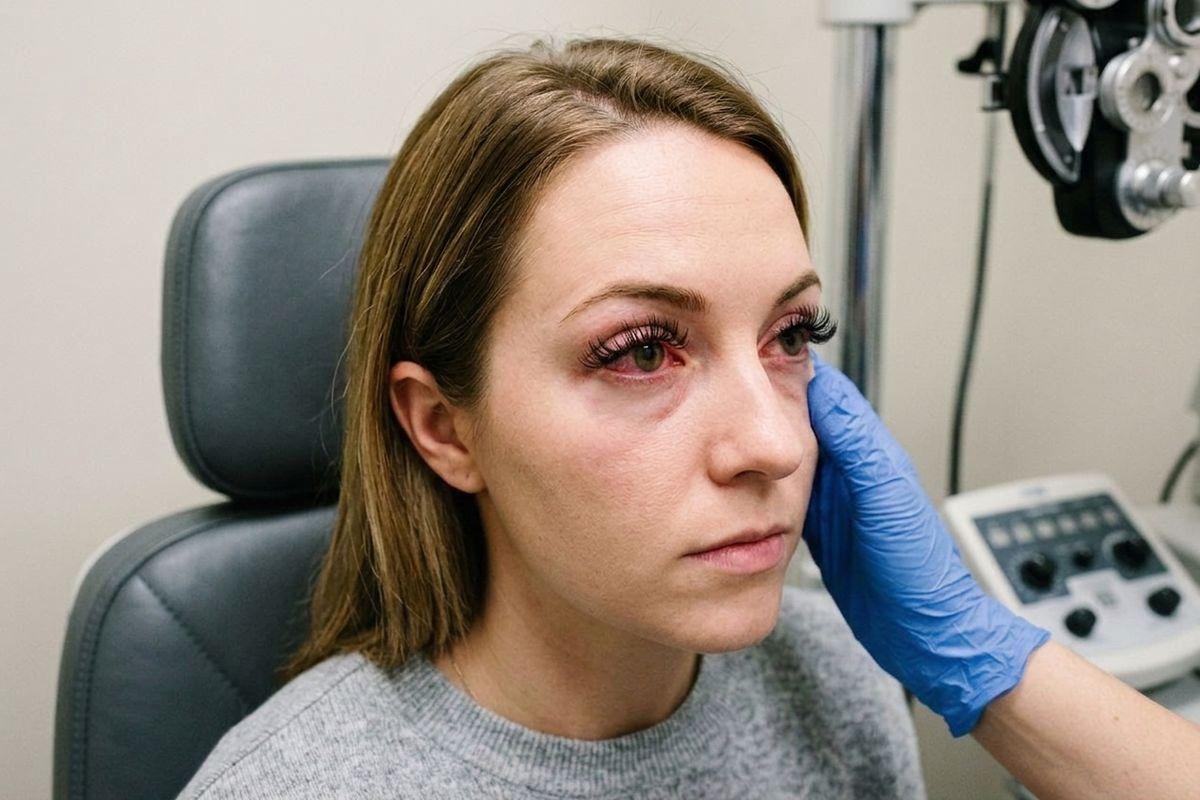
Some lash adhesives contain formaldehyde-releasing compounds, which can lead to an allergic reaction in sensitive individuals. You might not notice anything right away. Reactions often appear within 48 hours of application and can look like redness, swollen eyelids, or persistent itching along the lash line.
Even if you’ve worn extensions before without any issues, sensitivities can develop over time. Repeated exposure to the same adhesive ingredients can be enough to trigger a response that didn’t occur during previous applications. If your eyes feel irritated and you can’t pinpoint why, it’s worth scheduling an appointment with our team.
Infections and Inflammation
Lash extensions create more surface area along your lash line, and that extra texture can trap oil, makeup residue, and bacteria. When that buildup isn’t cleaned away regularly, it can lead to blepharitis, a condition where the eyelid margin becomes inflamed and uncomfortable and/or eye infections. This same buildup can also affect your meibomian glands, the tiny oil glands along your eyelid edge that help keep your tear film stable.
Blepharitis may contribute to crusting, flaking, and a gritty feeling in your eyes. It’s manageable, but it can become a recurring problem if lash hygiene isn’t taken seriously.
Natural Lash Damage
The weight of individual extensions can put ongoing tension on your natural lashes. Over time, that tension can be associated with traction alopecia, where lashes thin out or fall away from the follicle entirely. Pulling extensions off at home rather than having them professionally removed makes this worse. Forced removal can affect the follicle itself, which may impact how well your natural lashes grow back.
When to Seek Prompt Care
Pay attention to how your eyes feel in the days following a lash application. Some redness immediately after can be normal, but it should settle quickly. If it doesn’t, that’s worth noting. If you notice any of these signs, it’s a good idea to seek prompt eye care:
- Redness, swelling, or discharge around the eye or eyelid.
- Blurry vision or increased sensitivity to light.
- Pain, a burning sensation, or a persistent gritty feeling in your eye.
These symptoms could point to an allergic reaction, an infection, or irritation from adhesive contact with the eye itself. Our team is here to assess your eyes and help you find a path forward.
Tips for Safer Lash Wear
Choosing the Right Technician
A certified lash technician working in a clean, well-maintained space makes a real difference in your eye comfort and safety. Before your appointment, you can ask what adhesive they use and whether it contains formaldehyde. A knowledgeable technician should be able to answer your questions without hesitation.
Day-to-Day Lash Care
Clean your lash line gently but consistently. At Waterloo Vision Care Clinic, our Optometrists can make recommendations on products that can be safely used to clean your eyelashes and help protect the health of your eyes. Oil and debris can build up quickly, especially with extensions. We often recommend taking breaks between full sets to give your natural lashes time to recover from the added weight and adhesive exposure.
If dryness or irritation becomes a pattern, our dry eye clinic can assess whether your tear film or eyelid glands are being affected.
When to See an Eye Doctor
Some symptoms can clear up on their own within a day or 2, while others don’t. If you’re still experiencing redness, swelling, discharge, or discomfort after 48 hours, it’s a good idea to get your eyes examined. Unexplained lash loss or bald patches along your eyelid are also signs that something needs a closer look.
Regular eye exams can catch early signs of irritation or infection before they become more involved problems. The sooner our team identifies what’s happening, the sooner we can put a personalized plan in place. A condition like conjunctivitis can sometimes be confused with a general lash reaction, so a proper diagnosis makes a real difference in how it’s treated.
Schedule Your Visit
At Waterloo Vision Care Clinic, we offer thorough eye exams for patients across Kitchener-Waterloo. If your eyes haven’t felt quite right since your last lash appointment, we’d love to see you. Book your visit today.