

Key Takeaways
- Fit matters more than face shape when choosing sunglasses.
- Frame width should roughly match your face width, with height sitting from your brow line to two-thirds down your nose.
- Rounded frames tend to work across most face sizes, while square and aviator frames suit specific proportions.
- Lens colour affects both glare reduction and UV protection level.
- If you wear prescription lenses or have an eye condition, talking to an eye care team can help you find the right fit.
Why Sunglasses Fit Matters More Than Face Shape
You’ve probably heard the standard advice: “you have an oval face, so wear these frames,” or maybe, “square faces should avoid square lenses.” It sounds logical, but in practice, these rules rarely hold up in real life.
The better question isn’t what shape your face is, it’s whether your frames actually fit well. Frames that fit your face properly will look more flattering than a trendy shape that’s too wide or too narrow. Fit shapes everything, from how comfortable sunglasses feel on your nose to how much sun they actually block. UV light from sun exposure can cause real damage to your eyes, so getting the fit right is about more than just looks.
Lens size also plays a bigger role than most people expect. Smaller lenses leave gaps around the edges where UV light can still reach your eyes. On the other hand, frames that sit close to your face with a lens that covers your field of vision offer more protection on a bright day.
How to Find Your Frame Sweet Spot
Width and Height Guidelines
A simple starting point is that your frames should line up roughly with the widest part of your face. If your frames end before your temples or extend well past them, that’s usually a sign that the fit is off.
In terms of height, well-fitted frames typically sit just below your brow line and extend about two-thirds of the way down your nose. This range gives you solid coverage without overwhelming your face.
What to Avoid
Frames that are too narrow can leave your eyes more exposed to the sun and glare, which works against the whole point of wearing sunglasses.
Oversized frames can look off-proportionate, especially if they extend past your cheekbones or sit too far from your face. The size of your lenses matters, but so does how your frames rest on your nose and ears. If they slide around, they won’t be comfortable and will not provide adequate sun protection.
Popular Frame Shapes and What They Work With
Rounded Frames
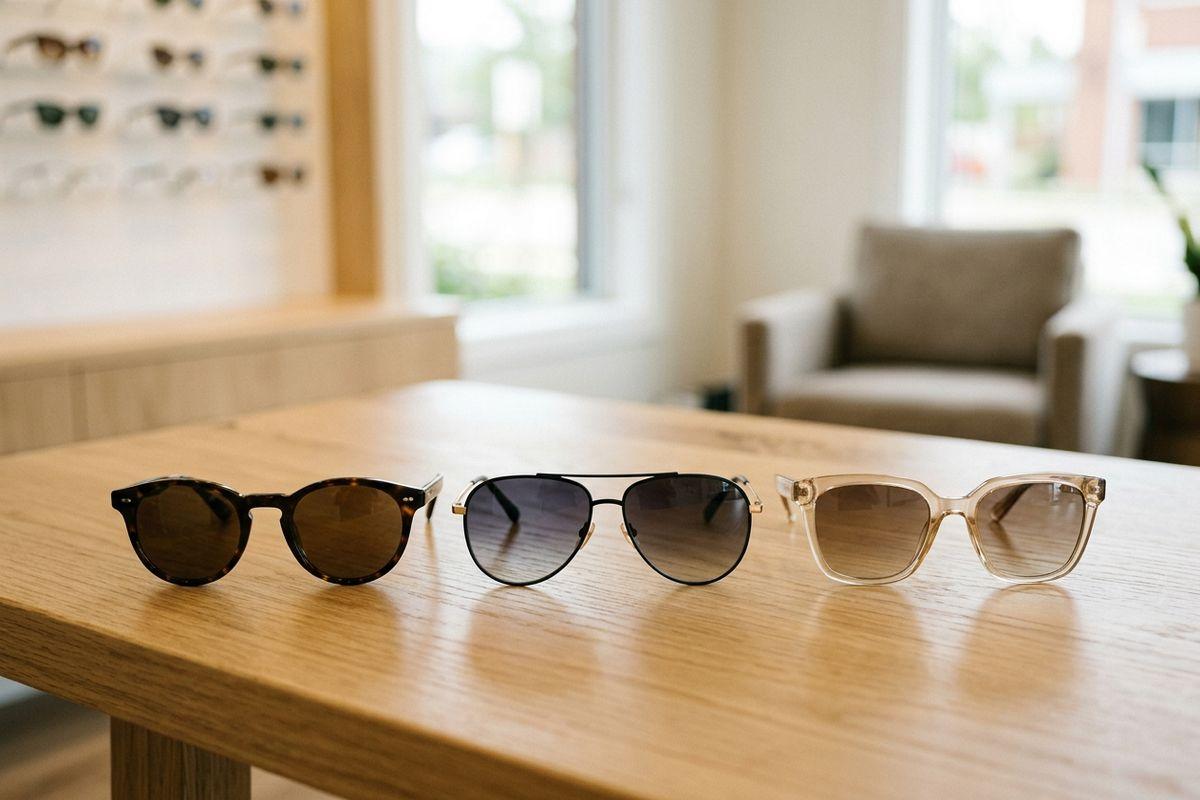
Rounded frames are a solid place to start. They tend to work across a wide range of face sizes without clashing with strong bone structures or softer features. If you’re not sure where to begin, rounded frames in a neutral colour are a low-risk choice.
These frames also work well with many prescription lenses, since the curved edges leave room for thicker lenses needed for stronger prescriptions.
Square & Aviator Frames
Square frames tend to suit wider head sizes. Their defined corners can look sharp, but they need enough face width to balance their bold shape.
Aviators have stayed popular for decades because they work with a lot of different proportions. The teardrop lens shape covers a good amount of the eye area, and the lightweight design makes them comfortable for longer wear. They sit well on most nose bridges, too.
Choosing Frame and Lens Colours
Frame Colour by Season
Black and tortoiseshell frames are timeless, easy to pair with most outfits and hold up across seasons without looking out of place.
Lighter frames, like clear acetate or warm beige tones, tend to feel more at home in spring and summer. In 2026, soft neutral tones are showing up a lot in eyewear, and they’re an easy way to refresh your look without going too bold. You can get a closer look at what’s trending this year in our 2026 eyewear trends guide.
Lens Colour Basics
Different lens colours actually have slightly different functions. Grey lenses keep colours true to life, which makes them a solid all-around pick. Green lenses reduce glare without distorting colours too much. Dark lenses in general are grouped by category, and the category number tells you how much light they filter.
- Category 0 to 1 lenses filter very little light and work for low-light or indoor use.
- Category 2 lenses suit partly cloudy days.
- Category 3 lenses are the standard choice for most outdoor activities and bright sun.
- Category 4 lenses block the most light.
UV protection is separate from lens darkness. A lens can look dark and still offer low UV protection, so always check the UV rating before you buy. At Waterloo Vision Care Clinic, we carry a wide range of prescription and non-prescription sunglasses for all ages, with proper UV protection built in.
Polarized Lenses and Glare Reduction
Polarized lenses are designed to reduce glare from reflective surfaces like water, snow, wet roads and car windshields. They use a special filter that cuts down on harsh reflected light, which can make outdoor activities more comfortable and reduce eye strain on bright days.
They’re especially popular for driving, fishing, hiking and spending time near water because they improve visual comfort without changing how dark the lenses appear.
It’s important to note that polarization and UV protection are not the same thing. Polarized lenses help with glare, while UV protection shields your eyes from harmful ultraviolet rays. Ideally, sunglasses should provide both.
When to Talk to Eye Doctors in Kitchener-Waterloo
If you wear prescription lenses, sunglasses get more complicated. Not all frames work with every prescription, especially stronger prescriptions that need a specific lens thickness or curvature of lens. Our eye care team at Waterloo Vision Care Clinic can help you find frames that fit your prescription.
Reach out to us today to book your next appointment.